
Ideas For Your BuJo – Pages That Bring Out Your Best
Discover how selecting the right bullet journal page ideas for personal growth can transform your life, improve your organization, and boost your productivity.
Your bullet journal is more than just a planner; It’s a powerful tool for inspiring creativity, tracking habits, and achieving goals. From motivational pages to practical trackers, each page serves a unique purpose in helping you stay focused and intentional.
Let’s dive into these 12 bullet journal page ideas to design a journal that enhances your life and supports your growth journey.
Bullet Journal Page Ideas
Disclosure: At no cost to you, I may get commissions for purchases made through links in this post.
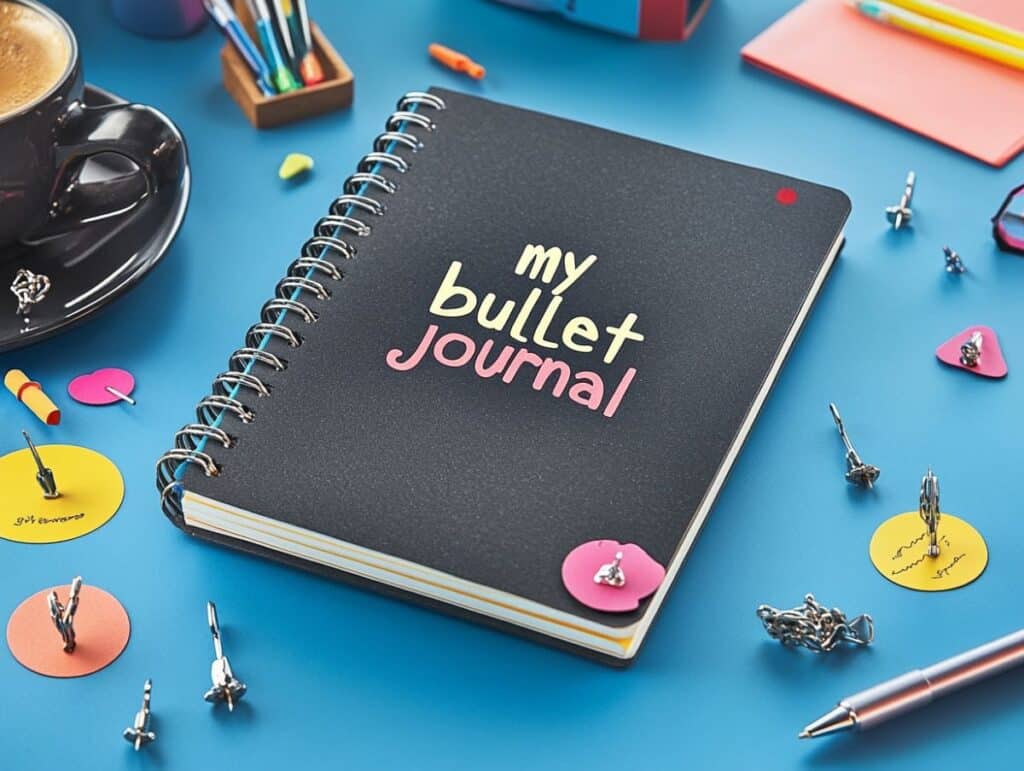
1. Cover Page

An inspirational cover page sets the tone for your bullet journal, serving as a motivating introduction to your personal growth and productivity journey.
This page adds creativity and provides a visual anchor to keep you inspired. It can feature empowering quotes, bold designs, or vibrant colors that reflect your goals and mindset.
Customize it with your unique style to create a meaningful start to your journaling experience.
Dig Deeper – What is a Bullet Journal and Why Keep One
2. The Bullet Journal Key Page

The key is your BUJO’s legend. It lists the symbols you’ll use to categorize tasks, events, or notes.
Typical entries include:
- Task: Represented by a dot (•) or a box (□).
- Completed Task: A checked box (☑) or an X (✗).
- Event: A circle (○).
- Note: A dash (–) or quotation mark (“).
- Important: A star (★) or exclamation mark (!).
- Migrated Task: An arrow (→).
- Canceled Task: A crossed-out box or line through text.
Create a simple, easy-to-remember system. Place the key on the first page so it’s always easy to reference.
3. Index

An index is like a table of contents. Use it to track where each section or page is in your journal.
Leave the first few pages after your key blank for this purpose. As you add new pages, jot down the page number and title in the index for quick reference and navigation.
For example, if you have notes about a trip to Europe on pages 34-36, 38, and 42, you’d write “Trip to Europe 34-36, 38, 42” in your index.
This system lets you use the next blank page for new pages without worrying about saving space. Just update the index with the new page numbers to keep everything organized!
Helpful Tips – How To Start a Bullet Journal for Beginners
4. Future Log

In the future log, you record essential items coming up in the months ahead.
Set aside several pages for your future logs. I like to look ahead at least three months. Many people choose a six-month outlook.
Include birthdays, upcoming events, critical deadlines, or milestones. This is your “big picture” view of the near future.
5. Monthly Log

Each month, there is a dedicated monthly spread in your BUJO. The monthly log is your notes of what’s happened in your life and a road map of things to do.
On one side, write all the dates and days of the month. The goal is to write things down after they happen. That way, you can have a much more accurate and valuable record of your life.
Create space for goals, tasks, and events on the other side of the page. This is where you can organize what you must do this month.
6. Daily Log

The daily log is your go-to page for tracking tasks, events, and notes for each day. You can make it minimal with bulleted lists or dress it up with doodles and quotes.
Use it as a flexible space to plan your day and record all the random new tasks, events, and notes as they pop up. It’s a catchall for everything you encounter daily.
7. Weekly Log
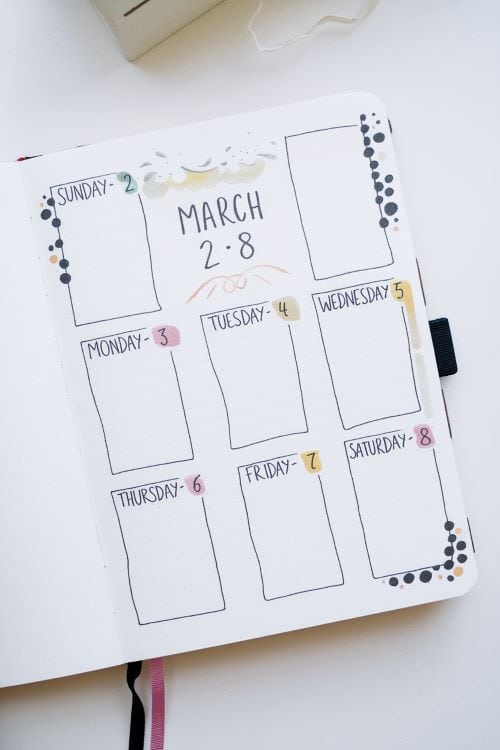
A weekly log is a practical tool in your bullet journal for staying on top of tasks, appointments, and goals throughout the week. A well-structured weekly log keeps you organized, focused, and better prepared to tackle each day confidently.
It provides an overview of your schedule, helping you manage your time effectively. Use it to list daily priorities, track habits, or jot down notes.
I make my weekly log a two-page spread. One page is dedicated to reflections and the other to daily planning.
8. Annual Goals Tracker

You can use this page to map out your goals for the year.
Break your goals into categories like career, health, or personal growth. Track progress by marking milestones.
You can add motivational quotes for inspiration. This page keeps your focus on the things that matter most.
Studies show that writing down your goals increases the odds of accomplishing them. To stay motivated and consistent, refer to this page often.
Helpful Tips – How To Stay Disciplined with Your Goals
9. Habit Tracker

A habit tracker is a visual way to build good habits.
Create a grid with days of the month along one axis and habits (e.g., exercise, hydration, reading) along the other.
Color in the squares for each day you complete a habit. It’s motivating to see your streaks grow!
Related post – Helpful Tips for Creating Good Habits
10. Gratitude Journal
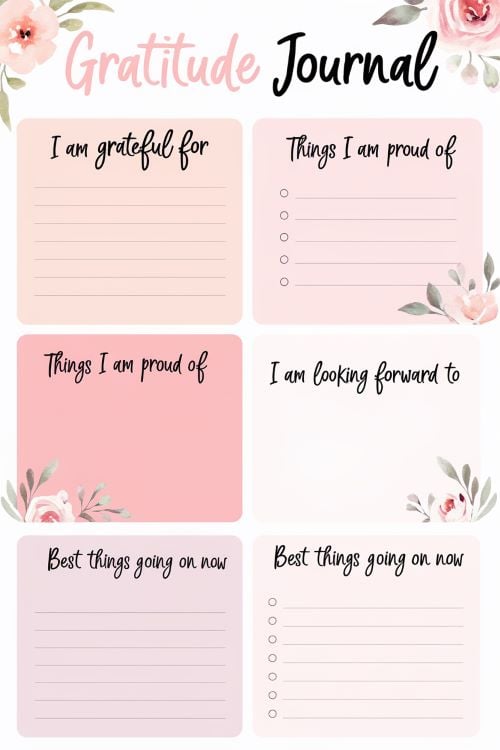
A gratitude page in your bullet journal is a dedicated space to reflect on and document what you’re thankful for each day. Whether it’s simple joys or meaningful experiences, this page encourages mindfulness and helps you focus on the good in your life.
Writing down moments of gratitude fosters a positive mindset, reduces stress, and enhances overall well-being. Over time, it becomes a robust collection of uplifting reminders to revisit whenever you need encouragement.
11. Big Ideas Inventory
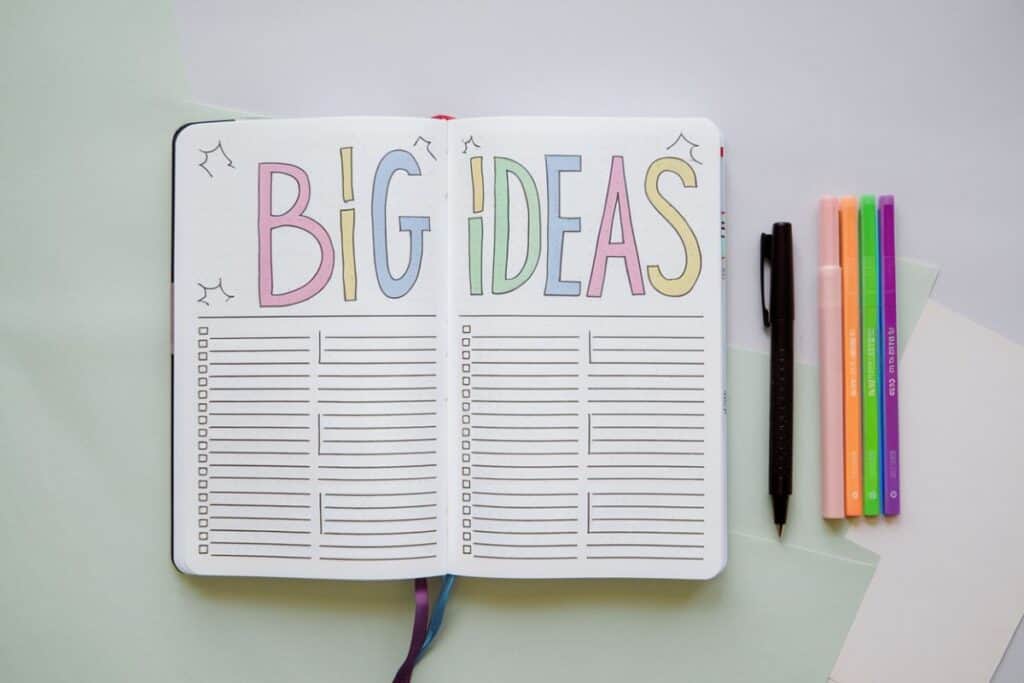
A big ideas page is the perfect space to capture and explore your creative thoughts, dreams, and plans as they arise. This two-page spread serves as a brainstorming hub where you can jot down ideas for future projects, goals, or inspiration.
Dedicating a specific area to these insights ensures they are not forgotten. Revisiting this page helps you develop and prioritize your ideas, turning your vision into actionable goals and steps.
See more – 107 Bujo Ideas for Your Planner
12. Budget Tracker

A budget tracker is an essential tool in your bullet journal for managing your finances effectively. This two-page spread allows you to document expenses as they occur, providing a clear overview of where your money goes.
You can track categories like housing bills, groceries, entertainment, and savings. This will help you identify spending patterns and stay on budget.
By consistently updating this tracker, you gain better control over your finances, make informed decisions, and work toward achieving your financial goals.
More ideas – How To Improve Your Financial Wellness
Bullet Journal Page Ideas – Wrap Up
Your bullet journal reflects your unique journey, offering a space to stay organized, inspired, and intentional. It’s about designing a tool that supports your growth and aligns with your goals.
Let your journal evolve with you, whether through creativity or structure. Embrace the process, and remember that every page is an opportunity to learn, reflect, and move closer to the life of your dreams.
Thanks for reading, and before you go, PIN IT:

Author Bio: Tom Scott founded the consulting and coaching firm Dividends Diversify, LLC. He leverages his expertise and decades of experience in goal setting, relocation assistance, and investing for long-term wealth to help clients reach their full potential.